Where do bitterns nest?
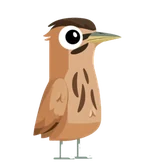
Bittern · Botaurus stellaris
Bitterns nest deep inside large, wet reedbeds, on a platform of old reed stems built just above shallow water. They need big, undisturbed reedbeds, so in Britain they breed in only a few places, mostly nature reserves. The males boom from February, and the female lays in April or May and raises the chicks on her own.
Nyth turns this into a puzzle. Play a level

- Where
- Deep inside large, wet reedbeds
- Nest
- A platform of old reed stems above shallow water
- When
- Booming from February, nesting April to June
- Eggs
- Usually 4 to 6, kept warm by the female for about 25 days
- Broods
- One
- Fledging
- About 50 to 55 days after hatching
- Protection
- Schedule 1: disturbing the nest needs a licence
Where bitterns nest
In reeds, and only in reeds. A bittern needs a big, wet reedbed, standing in water that stays at a steady depth, and it nests well inside it, away from the edges and away from people. The female picks a spot where the water is shallow, around 20 to 30 centimetres deep.
Reedbeds that size are rare, which is why the bittern is too. Most British bitterns nest on reserves where reedbeds have been kept or created for them, in places like the Somerset Levels and the coasts of Norfolk and Suffolk.
What a bittern’s nest looks like
A rough platform of last year’s reed stems and other plants, built up just above the water among the standing reeds. You will almost certainly never see one, and that is how it should be.
When bitterns nest
The season starts with the boom. From February, and most of all from March to May, male bitterns make a deep, foghorn-like call that can carry for kilometres across the reeds. Each male’s boom is slightly different, and researchers count bitterns by telling them apart.
The male plays no part in the nest. The female lays usually four to six eggs in April or May, sits on them for about 25 days, and feeds the chicks herself. Before they can fly the young leave the nest and clamber about the reeds nearby, and they fly at around 50 to 55 days old.
How to help bitterns
No garden can help a bittern. But it is one of the great comeback stories in British birds: they died out here as a breeding bird in the late 1800s, returned, and were down to just 11 booming males in 1997. New and restored reedbeds have brought them back to well over 200. What you can do:
- Support the reserves that make and manage reedbeds, by visiting or joining.
- Listen for one in spring. RSPB reserves such as Minsmere in Suffolk and Ham Wall in Somerset are good places to hear booming.
- Keep to the paths. Bitterns are on Schedule 1, so disturbing one at the nest without a licence is an offence.
Checked against: RSPB: Bittern, BTO BirdFacts: Bittern. Last checked 8 November 2026.
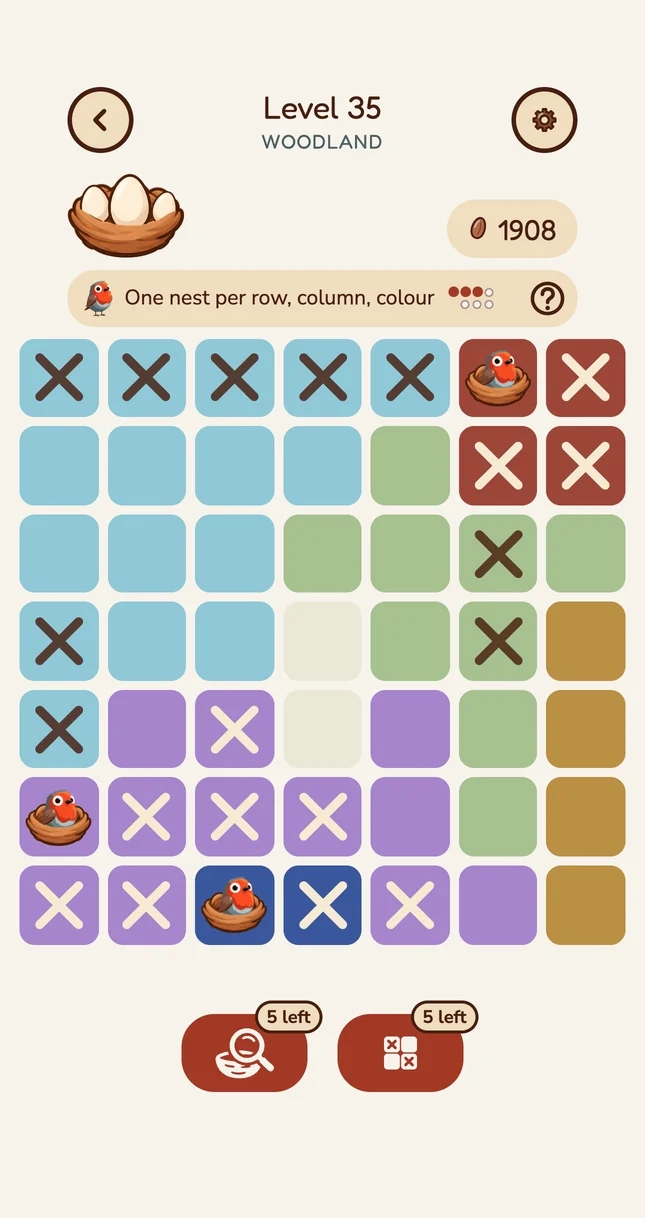
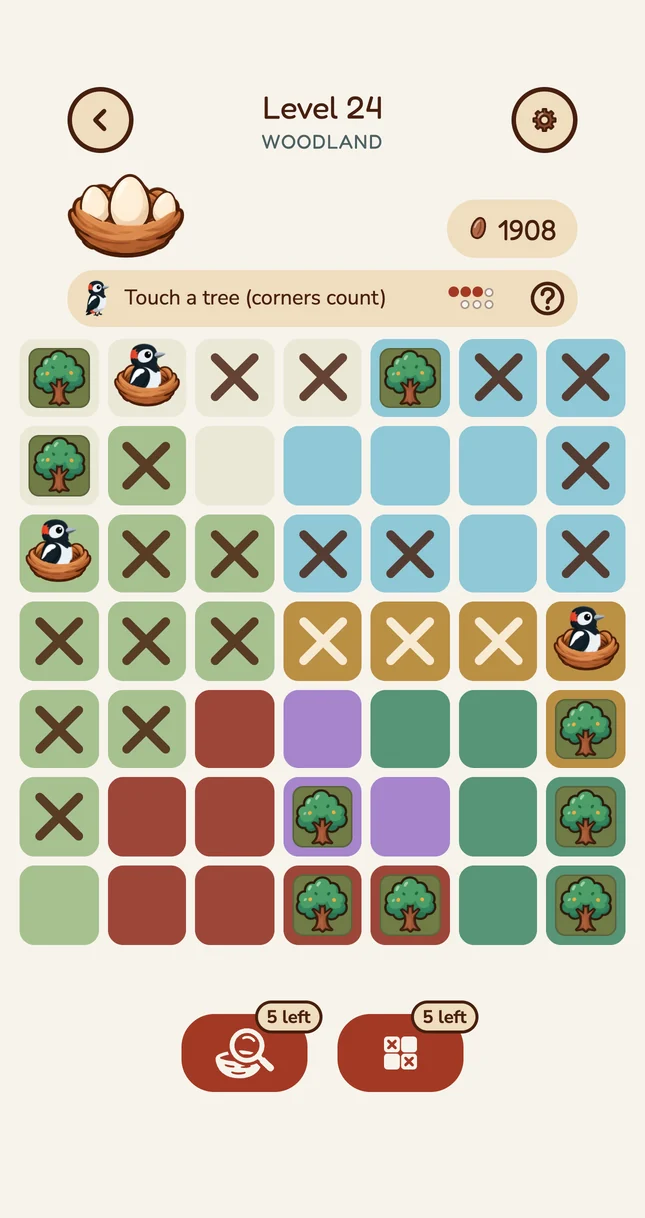
Your turn: find the robins a nest
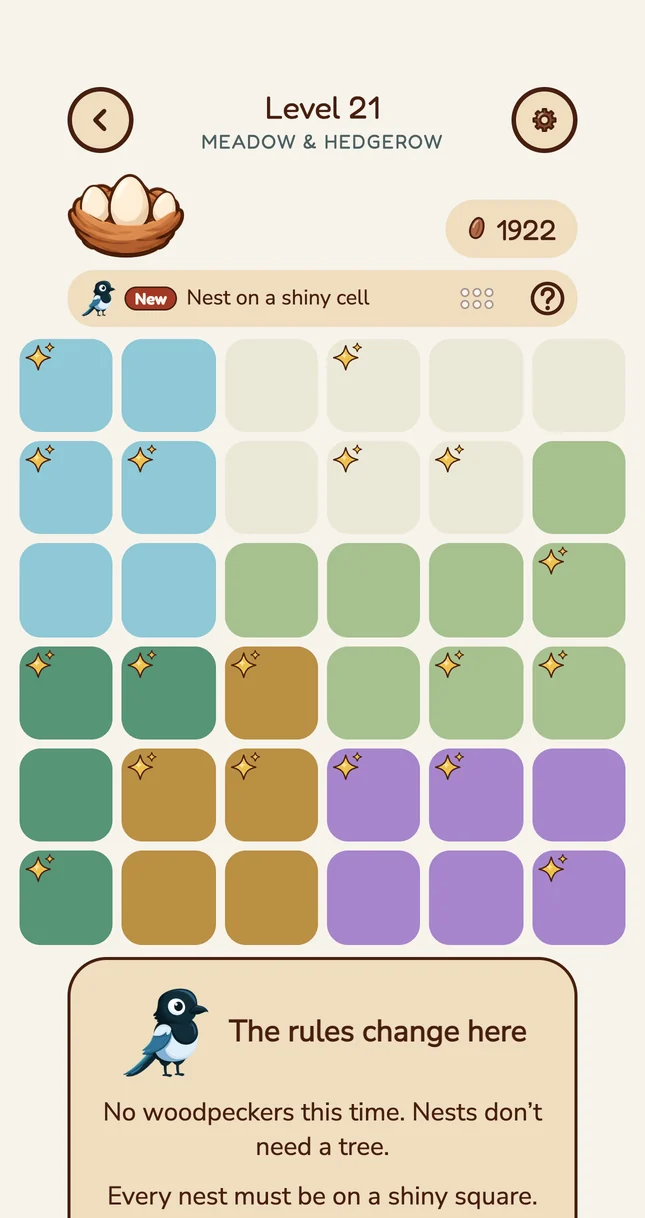
One nest in every row, every column and every colour, and no two nests touching, not even at a corner. Tap a square once to cross it off. Double tap to place a nest.

Every nest found
Those are the robin’s first three levels. The game has 1,000, and nineteen more birds.
On Android? Leave your email to hear when it is out there.
I only email about my games. Unsubscribe any time. Privacy policy
Questions
Where can I see or hear a bittern?
On reserves with large reedbeds, such as RSPB Minsmere and RSPB Ham Wall. Spring is the time to hear booming; winter, when birds from the continent join ours, can be a good time to see one.
When do bitterns boom?
From February, peaking from March to May. Only the males boom.
How many bitterns are there in the UK?
Well over 200 booming males, up from just 11 in 1997, thanks to new and restored reedbeds.
Are bitterns protected?
Yes. They are on Schedule 1 of the Wildlife and Countryside Act 1981, which makes disturbing them at the nest an offence.