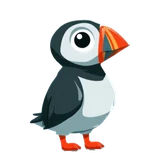
Where do puffins nest?
Puffin · Fratercula arctica
Puffins nest in burrows dug into soft, grassy turf on clifftops and islands around the coast, and sometimes among boulders. They dig their own with their bills and feet, or take over old rabbit burrows. Each pair lays just one egg at the end of the burrow. They are at the colonies from about April to early August, and spend the rest of the year out at sea.
Nyth turns this into a puzzle. Play a level
- Where
- Burrows in grassy clifftops and islands
- Nest
- A burrow up to about a metre long, with a grass-lined chamber
- When
- At the colonies from April to early August
- Eggs
- One, about 5 to 6 weeks of sitting
- Broods
- One
- Fledging
- About 5 to 6 weeks after hatching
- Status
- Red list in the UK
Where puffins nest
Underground. Puffins nest in burrows in the soft, grassy turf on the tops and slopes of sea cliffs, mostly on islands where there are no rats or foxes. They dig them with their bills and feet, kicking the soil out behind them, and they are just as happy to move into an old rabbit or shearwater burrow.
A big colony turns a whole clifftop into a warren, with puffins standing outside their front doors. Where the ground is too rocky to dig, some nest in gaps among boulders instead.
What a puffin’s nest looks like
You see a hole in the turf. Behind it the burrow runs back around 60 to 90 centimetres, sometimes more, to a chamber at the end, loosely lined with grass and feathers. That is where the single egg is laid.
When puffins nest
Puffins come back to the colonies from late March or April. Each pair lays one egg, and the parents share the work of raising it: the egg takes about five to six weeks to hatch. Then come the famous beakfuls of sand eels, as the parents fly back and forth to feed the chick, called a puffling.
After five or six weeks the puffling leaves the burrow on its own, at night, and heads straight out to sea. By early August most adults have left the colonies too, and they will not come ashore again until next spring. The young stay out at sea for a few years before they come back, and usually start breeding at around five.
How to help puffins
Puffins are on the Red list in the UK, and globally they are listed as vulnerable. You cannot help one from your garden, but you can visit them well:
- Keep to the paths. Burrows collapse under people’s feet, with the bird or the egg inside.
- Give them space. If birds take off as you approach, you are too close. No drones, and leave dogs at home.
- Keep lights low on colony islands. Pufflings head for the sea at night, and bright lights can draw them inland instead.
- Go with good operators. Choose boat trips that keep their distance from the cliffs and the rafts of birds on the water.
Where to see puffins in the UK
Skomer off Pembrokeshire, the Farne Islands off Northumberland, RSPB Bempton Cliffs in Yorkshire, the Isle of May in the Firth of Forth, Sumburgh Head in Shetland and Rathlin Island in Northern Ireland are some of the best-known places. May to mid-July is the time to go.
Checked against: RSPB: Puffin, BTO BirdFacts: Puffin. Last checked 8 November 2026.
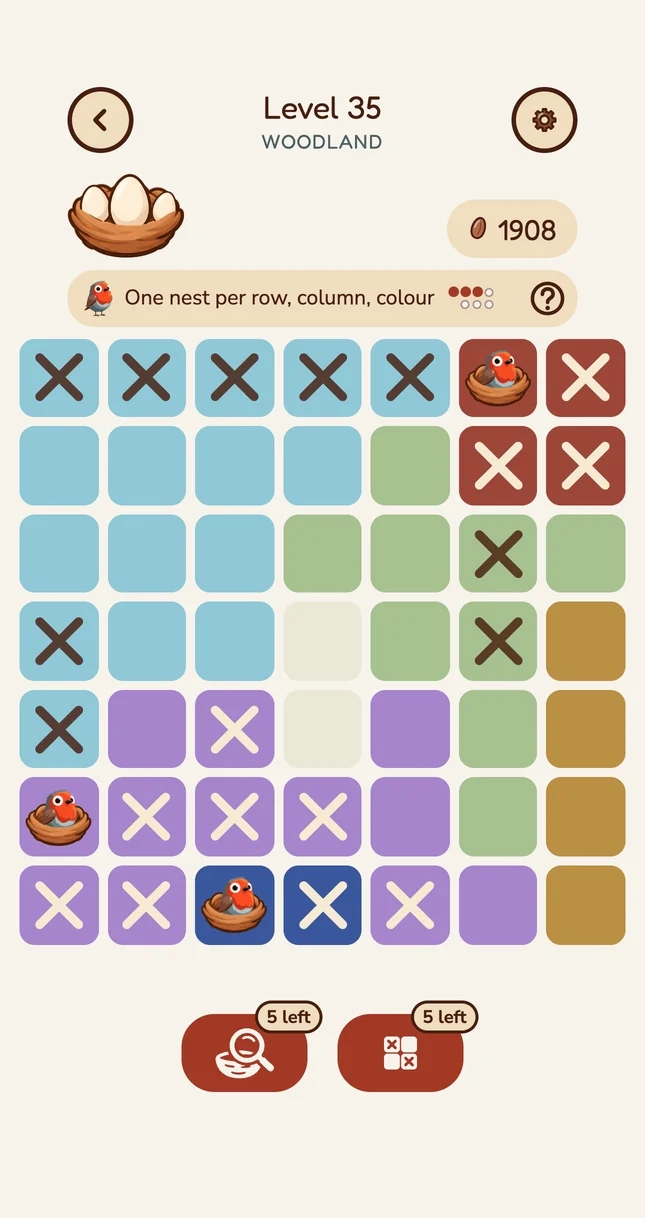
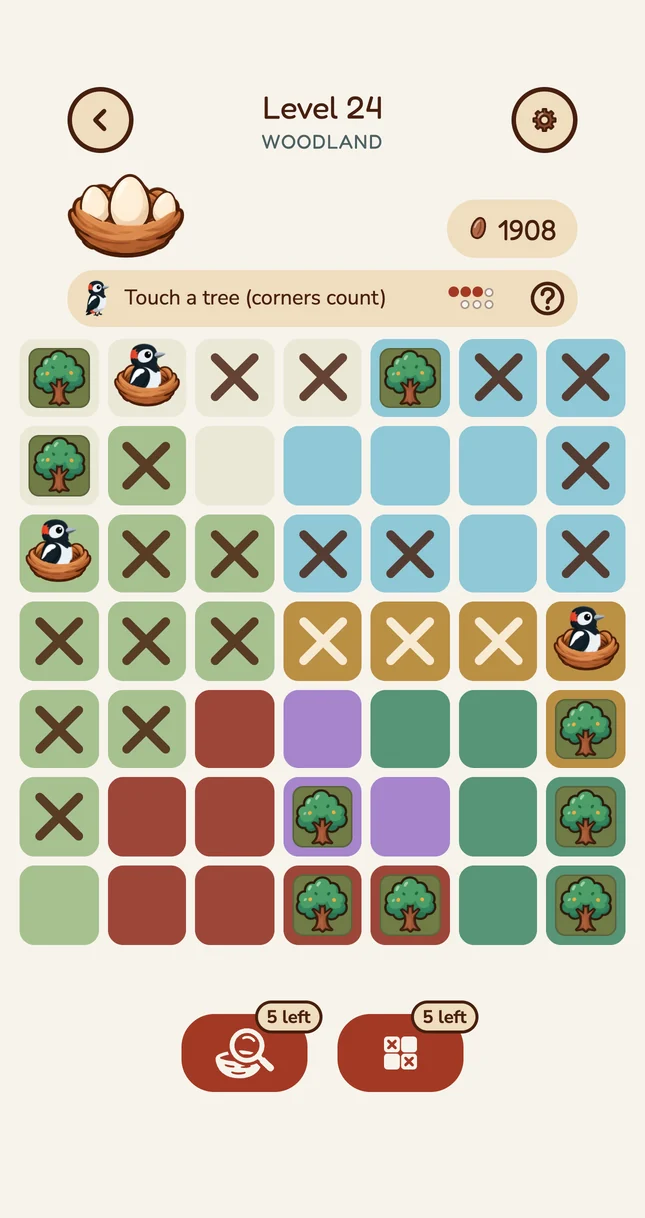
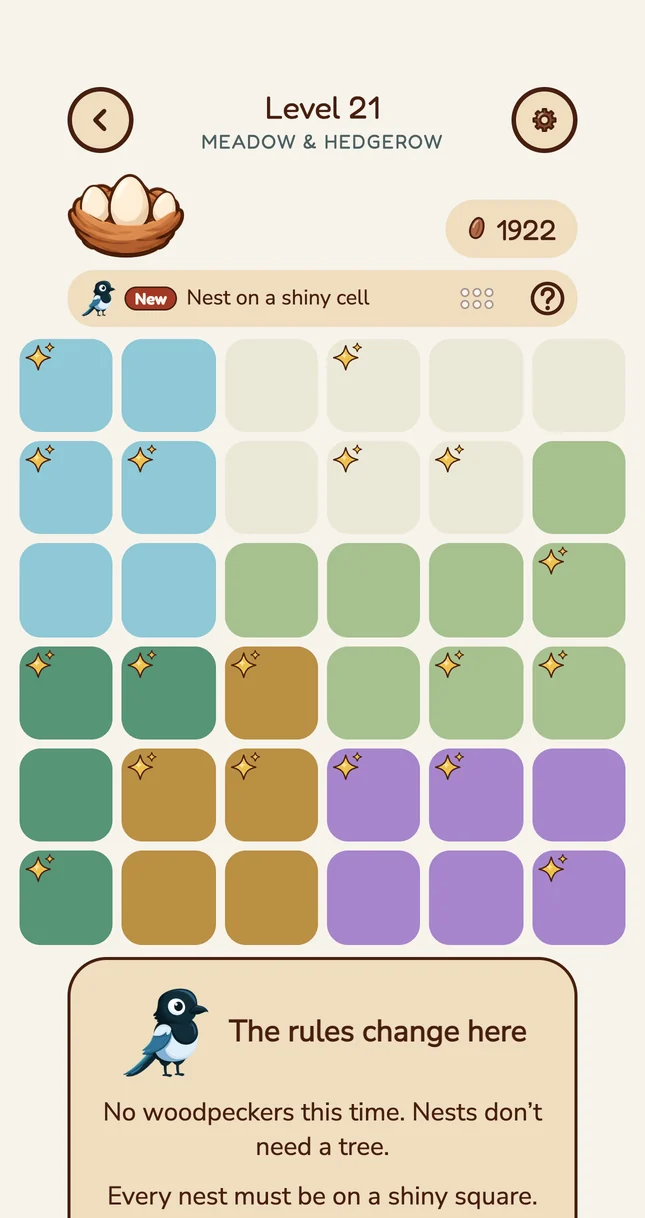
Your turn: find the robins a nest
One nest in every row, every column and every colour, and no two nests touching, not even at a corner. Tap a square once to cross it off. Double tap to place a nest.
Every nest found
Those are the robin’s first three levels. The game has 1,000, and nineteen more birds.
On Android? Leave your email to hear when it is out there.
I only email about my games. Unsubscribe any time. Privacy policy
Questions
Do puffins nest in burrows?
Yes. They dig burrows in grassy clifftops and islands, or take over old rabbit burrows, and lay their egg in a chamber at the end.
When can you see puffins in the UK?
From about April to early August. May to mid-July is usually the best time to visit a colony.
How many eggs do puffins lay?
Just one each year.
What is a baby puffin called?
A puffling. It leaves the burrow alone, at night, and goes straight out to sea.
Where do puffins go in winter?
Out to sea, far from land, until they come back to the colonies the next spring.