Where do cormorants nest?
Cormorant · Phalacrocorax carbo
Cormorants nest in colonies, in two very different places. Around the coast they nest on cliff ledges, rocky stacks and islands, packed close together. Inland, they nest in trees beside big lakes, reservoirs and gravel pits, often trees standing in or over the water. The nest is a heap of sticks and seaweed or water plants, and eggs are laid in spring.
Nyth turns this into a puzzle. Play a level
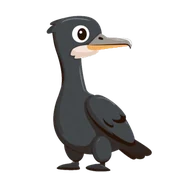

- Where
- Colonies on sea cliffs and islands, or in lakeside trees
- Nest
- A heap of sticks with seaweed or water plants
- When
- Spring; inland colonies have a longer season
- Eggs
- Usually 3 or 4, chalky pale blue, about 4 weeks of sitting
- Broods
- One
- Fledging
- About 7 weeks, then fed for weeks more
- Inland
- Tree colonies since 1981, now dozens of them
Where cormorants nest
For a long time the answer was simple: on the coast. Cormorants nested in colonies on cliff ledges, rocky stacks and small islands, with each nest barely a beak’s reach from the next.
Then in 1981 a colony started in trees at Abberton Reservoir in Essex, and inland tree colonies have spread since. Today many cormorants nest beside big lakes, reservoirs and flooded gravel pits, in trees on islands or overhanging the water. The trees are often dead, partly because the colony itself kills them, and bare branches make for easy landings.
What a cormorant’s nest looks like
On the coast it is a low, flattish heap of sticks and seaweed. In trees it is a bulkier stick platform, lined with leaves, grass and water plants. Either way it does not stay tidy for long. A cormorant colony is soon splashed white with droppings and has a smell of its own.
When cormorants nest
In spring. Coastal colonies tend to keep a short, tight season, with chicks hatching at about the same time. Inland colonies are more spread out, and nesting can carry on over a long season. There are usually three or four chalky pale blue eggs, and both parents take turns sitting on them for about four weeks.
The chicks are in the nest for around seven weeks and are fed by their parents for weeks after that. A cormorant standing on a post with its wings spread out to dry is one of the most familiar sights on any lake.
How to help cormorants
Cormorants are common and do not need nest boxes. The thing that matters most is to leave colonies in peace:
- Stay well back from colonies on cliffs and on islands in reservoirs, including when you are on a boat. Big chicks may jump from a ledge or tree if they are frightened.
- No drones near nesting colonies of any kind.
- Take fishing line home, since diving birds get tangled in it.
Checked against: RSPB: Cormorant, BTO BirdFacts: Cormorant. Last checked 8 November 2026.
Your turn: find the robins a nest
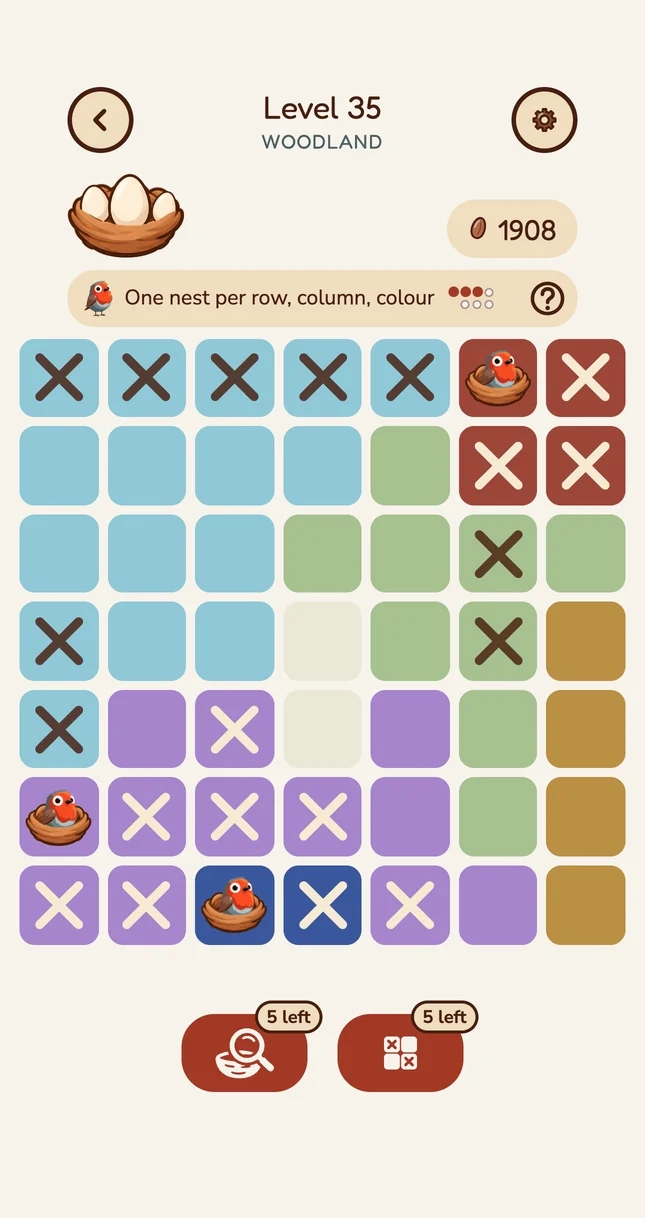
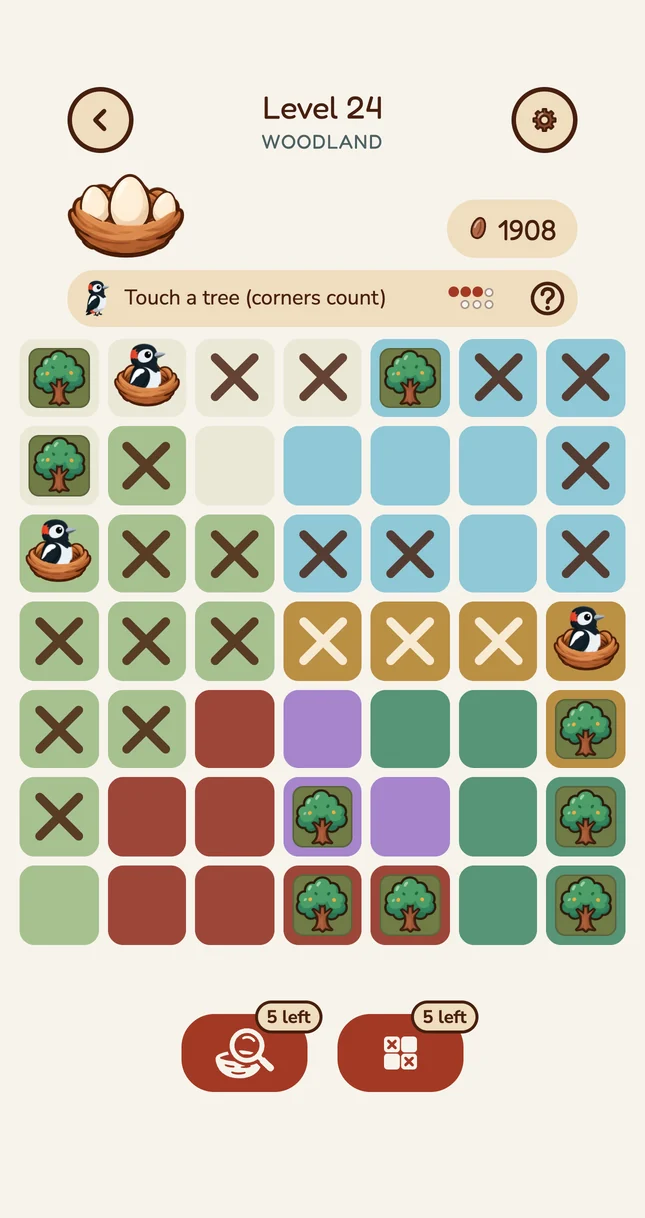
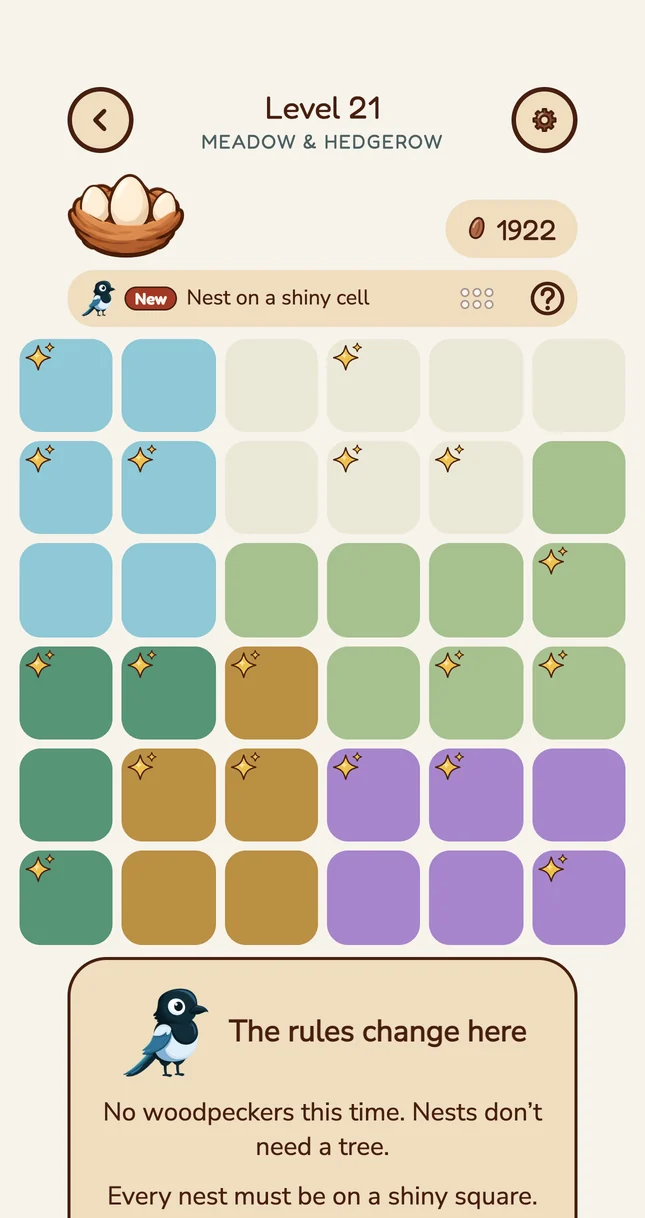
One nest in every row, every column and every colour, and no two nests touching, not even at a corner. Tap a square once to cross it off. Double tap to place a nest.
Every nest found
Those are the robin’s first three levels. The game has 1,000, and nineteen more birds.
On Android? Leave your email to hear when it is out there.
I only email about my games. Unsubscribe any time. Privacy policy
Questions
Do cormorants nest in trees?
Yes, inland. Since 1981 colonies have formed in trees beside lakes, reservoirs and gravel pits. On the coast they nest on cliffs and rocky islands.
When do cormorants nest?
In spring. Coastal colonies have a short, synchronised season; inland colonies nest over a longer period.
Why do cormorants hold their wings out?
To dry them after diving. Their feathers soak up water more than a duck’s do, which helps them swim down after fish.
Why are the trees at cormorant colonies dead?
Years of droppings from a busy colony can kill the trees, and cormorants are happy to keep nesting in them once they are bare.